According to data from NeighborhoodScout, Louisville, KY, scores a total crime index rating of three on a scale of 100, meaning many U.S. cities report lower overall crime levels. However, citywide averages rarely tell the full story. Crime in Loui sville varies significantly by neighborhood, with some areas experiencing consistently higher rates of violent and property crime than others.

Below, we examine the most dangerous neighborhoods in Louisville, KY based on publicly available crime data, long-term reporting trends, and community safety discussions.
RELATED: LOUISVILLE CRIME RATE STATISTICS
The Most Dangerous Neighborhoods in Louisville
Kentucky’s largest city, Louisville can claim to be the place in which the song “Happy Birthday” was penned. The home of the Kentucky Derby and the Louisville Slugger museum, it’s also the birthplace of the legendary Muhammad Ali. And yet, some of the areas in the city have crime problems that make home security systems in Louisville a valuable asset. Based on the latest crime data from AreaVibes, the following Louisville neighborhoods have the highest reported crime rates.
Park Hill
Park Hill leads the list of the most dangerous neighborhoods in Louisville according to AreaVibes. With a quoted population of 4,196, the neighborhood’s violent crime rate is 3,781 per 100,000 people. That figure makes Park Hill’s rate 434% higher than Louisville in general and 505% higher than the nation as a whole. A historic neighborhood, Park Hill is located just west of Old Louisville. Known for its urban setting near downtown, Park Hill’s boundaries are set by the CSX railroad tracks, Hill Street, 26th Street, and Oak/Virginia Avenues. Close-knit, the neighborhood offers a community feel within the larger city. While crime and danger have become associated with the reputation of the neighborhood, redevelopment plans are being considered, which hold the promise of turning Park Hill around.
Algonquin
Algonquin numbers some 6,845 residents. The reported violent crime rate in the area is 3,165 crimes per 100k people. This gives it 347% more crime than Louisville in general and 420% more than the national average. Located on Louisville’s West Side, Algonquin’s boundaries include Hill Street, Cypress Street, the CSX tracks, Algonquin Parkway and Bernheim Lane. Housing in the neighborhood primarily consists of Craftsman bungalows and National-inspired homes, generally with two or three bedrooms offering affordable prices for the Louisville area. Known for its early-to-mid-1900s homes, Algonquin’s ongoing revitalization efforts have largely centered around Algonquin Park, which was designed by noted landscape architect Fredrick Law Olmsted.
Shawnee
Shawnee is one of Louisville’s most populous neighborhoods. The Ohio River Flood of 1937, along with concerns of growing air pollution from the Rubbertown industrial complex caused many of the neighborhood’s upper and middle-class families to leave for areas farther east. Today Shawnee is home to an estimated 11,016 people and has a violent crime rate of 2,846 incidents per 100,000 residents. This is 302% higher than Louisville as a whole as well as 391% higher than the national average. The area’s boundaries are the Ohio River, Bank Street, I-264 and West Broadway. Shawnee’s residents voted to ban liquor sales in four precincts of the neighborhood in an effort to combat crime in 2007. While crime rates have since declined, it remains a concern for the area.
RELATED: SAFEST AREAS IN LOUISVILLE
Jacobs
Jacobs, located on the city’s south side, is bounded by Berry Boulevard, Taylor Boulevard, I-264 and Seventh Street. Offering a mix of urban and suburban living, Jacobs is known for its many parks, as well as the community-oriented atmosphere its residents have created. Jacobs is also known for relatively affordable housing. Home to an estimated 5,199 residents of the Louisville area, the neighborhood is reported to experience approximately 2,843 crimes per 100k people. This ranks it as having 302% more crime than Louisville as a whole and 467% more than the U.S. in general. Once home to some of Louisville’s most affluent residents, Jacobs evolved from aristocratic beginnings into an area of industrial growth and urban challenges.
Chickasaw
Chickasaw, during the Jim Crow era, was designated an African American neighborhood. Bounded by West Broadway, 34th Street, Hale Avenue, and Chickasaw Park, the area’s 5,521 residents are living with the effects of environmental racism, stemming from the city’s history of segregation. With a rate of 2,735 crimes per 100,000 people, Chickasaw is reported to experience 287% more crime than Louisville in general and 433% more crime than the nation as a whole. However, it should be noted there is more to Chickasaw than those statistics suggest. The neighborhood’s history has attracted the attention of the National Park Service’s Underrepresented Communities Grant program. This could lead to the listing of many of the neighborhood’s buildings and sites in the National Register of Historic Places, which will attract redevelopment and bode well for the future of the area.
Factors That May Contribute to Crime Rates
While no single factor defines a neighborhood, areas that report higher crime activity often experience a mix of environmental and economic stressors. These may include:
- Limited access to social services
- Higher poverty or unemployment rates
- Under-resourced infrastructure
- Fewer community programs or patrols
With that in mind, it’s important to note crime data doesn’t always define a neighborhood’s character or potential. Many of these communities are home to dedicated residents and local organizations working toward positive change.
Best Practices If You Live in a High-Crime Area
Being proactive doesn’t require a major investment, even simple steps can improve safety and visibility:
- Keep your property well-lit at night
- Always lock doors, windows, and vehicles
- Install visible cameras or video doorbells
- Join or start a neighborhood watch
- Coordinate with neighbors via apps like Nextdoor or Citizen
- Report suspicious activity to LMPD online, or phone 502.574.LMPD
Crime prevention starts with community awareness and consistent action.
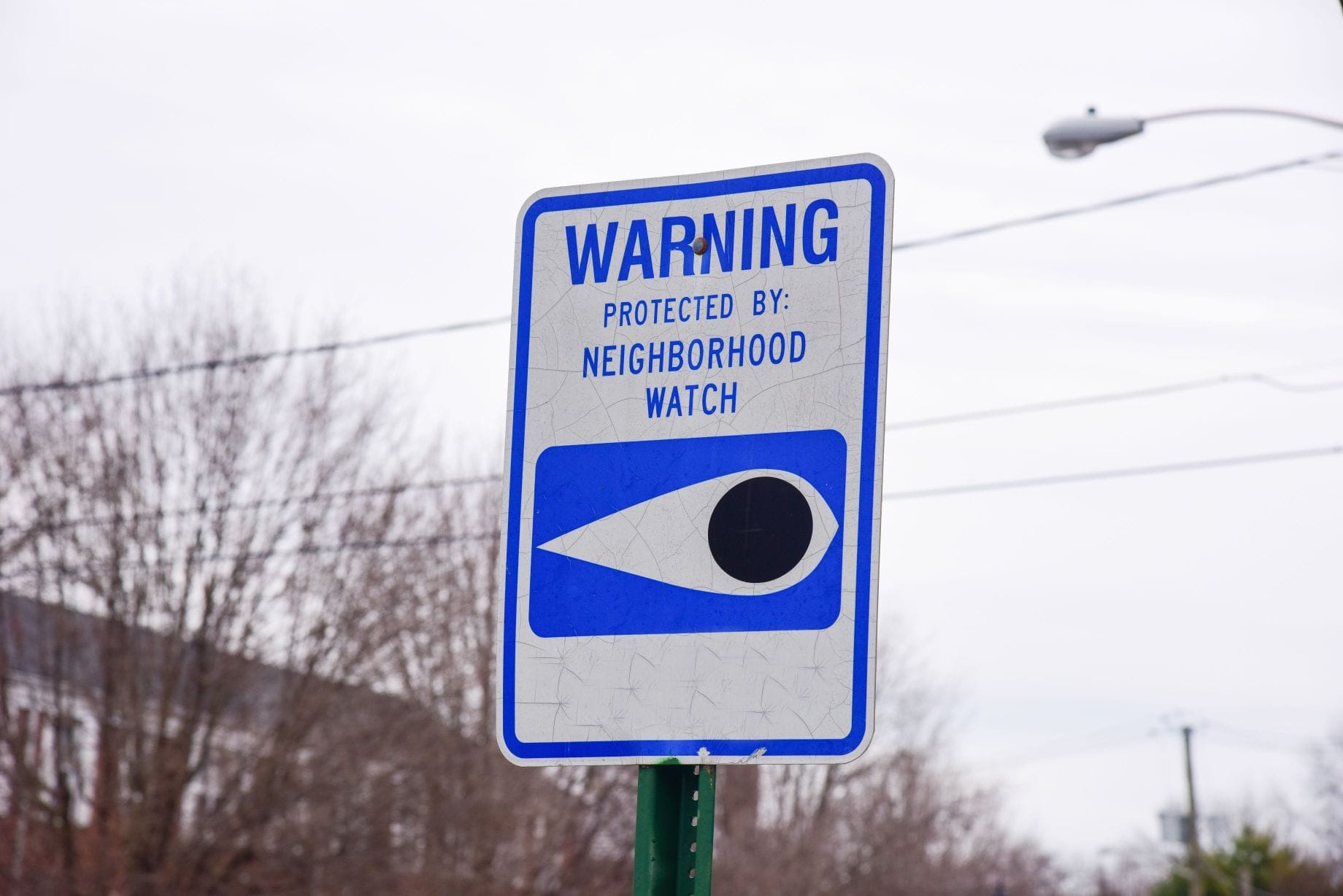
RELATED: TOP NEIGHBORHOOD WATCH APPS
How Guardian Protection Can Help
For residents concerned about home safety, technology can add an extra layer of awareness and deterrence. Guardian Protection offers tools designed to support proactive security, including:
- Outdoor security cameras with motion-triggered alerts
- Video doorbells that record and notify in real time
- Smart sensors to monitor doors and windows
- 24/7 professional monitoring for fast emergency response
Our systems help families stay informed and connected, even when they’re not at home.
EXPLORE GUARDIAN’S SERVICES IN YOUR AREA: HOME SECURITY IN LOUISVILLE
Building a Safer Louisville Together
Crime data can be helpful for awareness, but it doesn’t tell the full story. What matters most is how communities respond. Whether you’re already involved in local safety efforts or just looking to protect your household, every step makes a difference.
Guardian Protection is proud to support Louisville homeowners with home security solutions that fit your neighborhood’s needs.
Ready to feel more secure? Get your free quote or call 502.874.5834 to learn more.
Frequently Asked Questions
Is Louisville a dangerous city?
Crime levels vary significantly by neighborhood. Some areas report higher violent crime rates, while others maintain low incident levels. With that said, AreaVibes gives Louisville as a whole an F in that category, as its total crime rate is 113% above the national average.
What are considered the most dangerous neighborhoods in Louisville?
According to 2025 AreaVibes data, neighborhoods like Park Hill, Algonquin, Shawnee, Jacobs and Chickasaw consistently report some of the highest violent crime rates in the city.
Is Park Hill one of the District’s most dangerous areas?
Statistics compiled by AreaVibes rank Park Hill among the most dangerous neighborhoods in Louisville. The area reports a violent crime rate of approximately 3,781 incidents per 100,000 people, which is more than four times higher than the citywide average and significantly above national levels.
What are some of the safest neighborhoods in Louisville?
Neighborhoods such as Tyler Park, Bonnycastle, Belknap, Hawthorne and Old Louisville consistently demonstrate low violent crime rates and strong community engagement.
How can I protect my home if I live in a high-crime neighborhood?
Start with basic security measures like maintaining good lighting, locking doors and windows, and installing visible cameras or video doorbells. Joining or starting a neighborhood watch and coordinating with neighbors via apps like Nextdoor or Citizen also enhances safety. Consider professional home security systems with 24/7 monitoring for added peace of mind.
Learn More About Home Security
Get more information on how to enhance your home’s protection.