

Texas generally gives homeowners more flexibility than Maryland or Florida, especially on audio. Texas law provides an affirmative defense when a private person intercepts a communication, and that person is a party to it or one party has given prior consent, unless the communication is intercepted for the purpose of committing an unlawful act. But Texas also has a specific invasive-visual-recording law that homeowners should not overread or underread: it is focused on intimate-area recording and recording in a bathroom or changing room, not a blanket ban on all indoor cameras everywhere. This article is informational only and not legal advice.
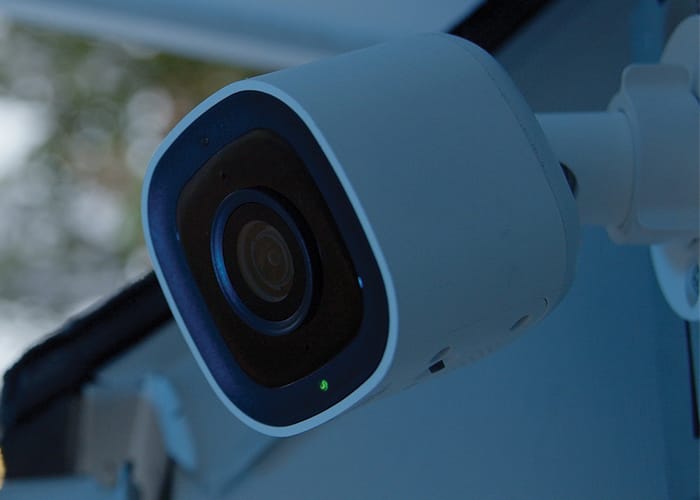
Are Home Security Cameras Legal in Texas?
Generally, yes. A typical Texas home-security setup aimed at a front door, porch, driveway, yard, or garage is usually much easier to justify than a setup that records private conversations you are not part of or tries to capture intimate private imagery. That is why home security cameras are generally workable in Texas for ordinary residential use.
The place where the earlier draft drifted too far was visual privacy. Texas absolutely restricts invasive visual recording, but the current law is narrower than a generic “no cameras in bedrooms” summary would imply. The statute specifically targets recording an intimate area when the person has a reasonable expectation it is not subject to public view, and recording another person in a bathroom or changing room.
Audio Recording Laws in Texas
Texas is commonly described as a one-party consent state because the statute creates an affirmative defense for a private person who intercepts a communication when that person is a party to it or one party has given prior consent, unless the interception is for the purpose of committing an unlawful act. That makes Texas less restrictive than Pennsylvania, Maryland, or Florida for private-person audio recording.
For homeowners, that means audio on a video doorbell is not automatically as risky as it is in an all-party-consent state. But it still does not mean you should record broadly just because you can. Recording interactions you are part of is easier to justify than capturing private conversations between other people.
Texas also treats unlawful interception seriously. The official Texas statute states that an offense under § 16.02 is a felony of the second degree unless committed under certain specific subsections, in which event it is a state jail felony. So even in a more flexible one-party-consent state, audio misuse is not a casual issue.
RELATED: HOME SECURITY VIDEO SURVEILLANCE LAWS BY STATE: WHAT YOU NEED TO KNOW
Video Surveillance and Expectation of Privacy
Texas Penal Code § 21.15 says a person commits an offense if, without the other person’s consent and with intent to invade privacy, the person records, broadcasts, or transmits a visual image of an intimate area when the other person has a reasonable expectation that the intimate area is not subject to public view, or records another person in a bathroom or changing room. The statute also says an offense under this section is a state jail felony.
So the clean Texas rule is this: bathrooms are a hard no, changing rooms are a hard no, and any setup that could plausibly capture intimate areas is a hard no. That is the real visual-recording boundary the statute gives you. It is still wise to be conservative with bedrooms and guest-use spaces from a general privacy standpoint, but the current invasive-visual-recording law itself is narrower and should be described that way.
Texas also explicitly says that, for the bathroom-or-changing-room part of the statute, signs posted saying a person is being photographed or recorded are not enough by themselves to establish consent. That is another reason Texas should not be treated like a “signage solves it” state.

Can Security Cameras Record Neighbors or Public Areas?
Texas’s invasive-visual-recording law is aimed at intimate-area and bathroom/changing-room recording, not ordinary street footage. So a camera monitoring your driveway or front yard is usually a much different situation from a device aimed into a neighbor’s bathroom window, bedroom window, or other secluded space. The cleanest residential practice is still to point cameras at your own property and keep neighboring private areas out of the frame whenever possible.
Security Cameras in Apartments and Rental Properties
Texas is different from Maryland, Florida, and Virginia on landlord entry. The Texas State Law Library states there are no state laws regulating landlord entry in Texas. Instead, the lease agreement may allow entry under certain circumstances, and if the lease does not allow entry or does not address it, the landlord may not have that right without permission, subject to exceptions like emergencies or repairs.
That makes lease language especially important for renters in Texas. If a tenant wants a doorbell camera, a hallway-facing device, or an indoor camera meant to document entry, the starting point is the lease, not a statewide 24-hour or 72-hour notice rule. In practice, indoor cameras inside the unit are often the simpler and lower-risk option.
RELATED: WHAT IS THE BEST OUTDOOR SECURITY CAMERA
Penalties for Illegal Security Camera Recording in Texas
Texas’s invasive-visual-recording statute says the offense is a state jail felony. Texas’s interception statute says most § 16.02 offenses are second-degree felonies, with narrower exceptions graded as state jail felonies. So Texas is more flexible on consent than Maryland or Florida, but the criminal penalties are still severe if a homeowner crosses the line.

Best Practices for Using Security Cameras Legally
In Texas, the safest setup is still the simplest one. Aim cameras at doors, driveway, porch, garage, and yard. Avoid any angle that could capture an intimate area or record someone in a bathroom or changing room. Use audio mainly for interactions you are part of, not for broad environmental recording. If you rent, read the lease before assuming you have a right to mount a device or rely on a certain notice period. That fits the actual Texas statutes much better than the earlier drifted version did.
Using Security Cameras Responsibly in Texas
Texas gives homeowners room to use residential cameras, but the law still draws hard lines around intimate-area recording, bathroom and changing-room surveillance, and unlawful audio interception. A visible, property-focused setup with conservative audio use is usually the safest approach.
If you want better visibility around your home without making your security setup more complicated than it needs to be, Guardian Protection can help. From front-door coverage to driveway and perimeter monitoring, we can help you build a camera system that supports your day-to-day security needs. Get your free quote or call 1.800.PROTECT (800.776.8328) to learn more.
Frequently Asked Questions
Are home security cameras legal in Texas?
Yes, generally. Texas homeowners can usually use security cameras for ordinary residential security purposes such as watching doors, driveways, porches, garages, and yards. The key legal issues are unlawful audio interception and invasive visual recording.
Is Texas a one-party consent state?
Texas law provides an affirmative defense when a private person intercepts a communication and that person is a party to it or one party has given prior consent, unless the interception is for the purpose of committing an unlawful act. That is why Texas is generally treated as a one-party consent state.
Can my doorbell camera record audio in Texas?
Potentially, yes. Texas is more flexible on audio than Maryland or Florida, but it is still safer to use audio mainly for interactions you are part of rather than broad background recording of other people’s conversations.
Where should I never place cameras?
Bathrooms and changing rooms are the clearest statutory no-go areas in Texas. The law also prohibits recording an intimate area without consent when the person has a reasonable expectation that it is not subject to public view.
Are bedroom cameras illegal in Texas?
Not automatically under the current invasive-visual-recording statute. The statute is narrower than that and focuses on intimate-area recording and recording in a bathroom or changing room. That said, bedrooms can still be poor placements from a general privacy and guest-use standpoint.
Are signs enough consent in Texas?
Not for the bathroom-or-changing-room part of the invasive-visual-recording law. Texas specifically says posted signs are not sufficient by themselves to establish consent there.
Can my cameras record the street or sidewalk?
Usually, yes, if the system is aimed at monitoring your own property and not being used to capture neighboring private spaces or intimate areas.
Can I point a camera at my neighbor’s yard?
You should avoid deliberate coverage of neighboring private areas, especially where the setup could capture intimate or highly private activity. The cleaner residential practice is to keep the frame focused on your own property.
Do Texas landlords have to give 24 hours’ notice before entry?
Texas does not have a general statewide landlord-entry statute that sets a universal notice rule. The Texas State Law Library explains that lease language is usually the starting point.
What are the penalties for illegal recording in Texas?
Texas says an offense under the invasive-visual-recording law is a state jail felony. Texas also treats unlawful interception seriously under its interception statute, with felony grading in most cases.
Discover More About Home Security
Get more information on how to enhance your home’s protection.


